
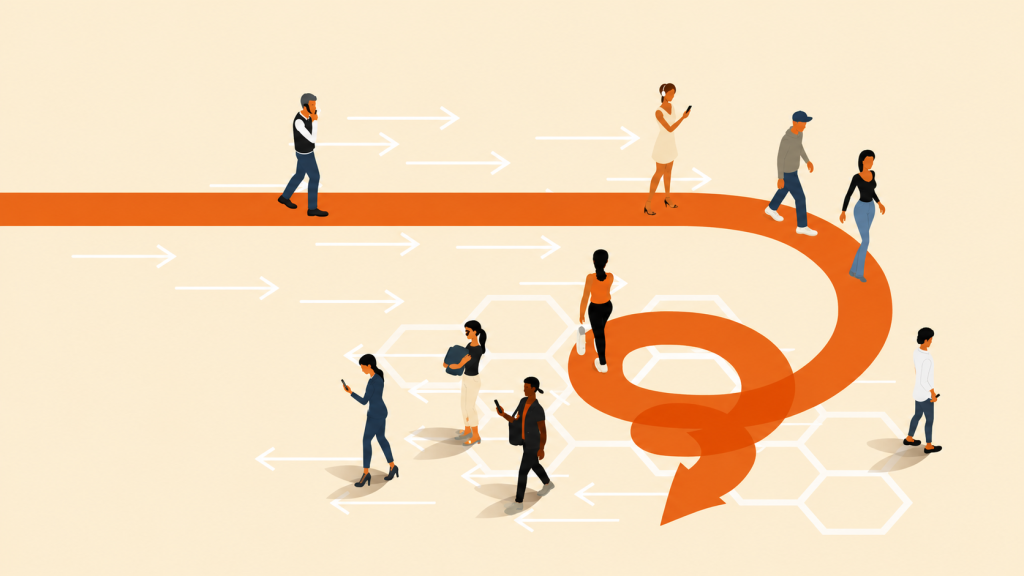
Imagine moving your business to a market that never closes. That’s what happens when you take your business online. Online storefronts can sell to a global audience and keep track of every customer interaction including casual store visits and button clicks.
What More?
An online store won’t stop you from managing and selling the same inventory in a physical store location.
Impressive right?
But being online is not the same as succeeding online. Many businesses invest time and money into a website or social media presence only to see little return. The reason is almost always the same: they went digital without a clear strategy. Use our roadmap to avoid these pitfalls.
Start With a Plan
Before jumping off to build your website, create a Facebook business page or list your business with a search engine, take some time to answer these fundamental questions:
- What do I want to achieve online? (Sales? Brand awareness? Customer support?)
- How will I measure and track performance?
- What resources (in time, money, people) do I need to deploy?
Without clear goals, every online activity becomes guesswork. With them, you have a compass that guides every decision, from which platforms to use to the kind of content you need.

Know And Understand Your Customer
Even online, you will need to hang around the places and things your customers spend their time on. Your strategy lives or dies by how well you understand the people you’re trying to reach. Your customers leave a trail of data. What they search for, what they click on, how long they stay on a page and other trackable activities. You can gain useful insights from your customers by studying their:
- Demographics: Their age, location, income, occupation.
- Psychographics: Their values, interests, lifestyle, pain points.
- Online behavior: Which platforms they use and the content they engage with.
Free tools like Google Analytics and Meta (Facebook) Audience Insights can give you a surprisingly detailed picture of who your audience is and how they behave online.
Tip: Asking questions like “How did you find us?” or “What problem were you trying to solve?” in customer surveys can yield insights most analytics tools simply can’t capture.
Choose the Right Platform
Each social network and e-commerce platform attracts a specific type of audience and rewards specific content types. Spreading yourself too thin across every platform is be a recipe for disaster.
Here’s how you can decide which is best for you:
- Instagram & TikTok: Ideal for visual, lifestyle, and consumer brands targeting younger audiences.
- Facebook: Broad demographic reach, especially strong for local businesses and community building.
- LinkedIn: Best for B2B companies, professional services, and recruitment.
- Google Business Profile: Essential for any business with a physical location or local customer base.
- Your own website: Anchors all your activities online. Unlike social media, you own it completely.
Focus on one or two platforms where your target customers are most active, master them, and only expand when you are able to consistently maintain quality.
Work with a Content Strategy
Branded content includes everything a business shares online from product images to blog posts and testimonials. If you are the face of your business, your personal brand also becomes part of that content ecosystem. Because the internet is saturated with content, the only way to stand out is to produce material that is genuinely valuable and relevant to your target customer.
Before you post anything, answer these questions:
- Who exactly am I creating this for?
- What problem does my content solve for them?
- What content format works best for my intentions? (Short video? Long article? Infographic? Story?)
- How often can I realistically publish, and on which platform?
Consistency matters more than frequency. Publishing once a week for a year will always outperform a burst of daily posts followed by silence. Build a simple content calendar to plan topics in advance and keep your output steady.
Remember: The best content is not about you, it’s about your customer. Lead with their needs, their questions, and their interests. Strong content reinforces your brand identity, which goes far beyond a logo or color palette.
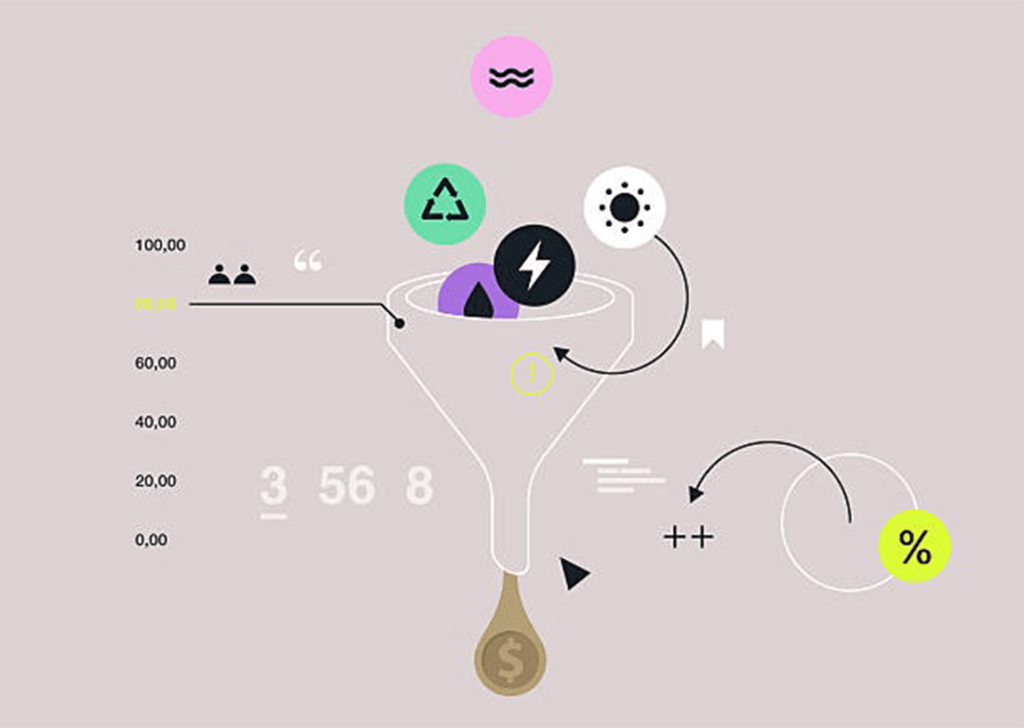
Build a Marketing Funnel
A marketing funnel is a framework for guiding potential customers from their first awareness of your brand to making a purchase, and ideally, becoming repeat buyers.
Most experts think of marketing funnels in four stages:
- Awareness: The customer’s first encounter of your brand. This could be from a Social media post, Google search, word of mouth etc.
- Interest: They engage with your content or visit your website to learn more.
- Decision: They compare options and consider buying from you.
- Action: They make a purchase or take the desired action.
Every content a business creates should serve one of these stages. A blog post might build awareness. A product demo video might help someone decide. A limited-time discount might push them to act.
If you already have a working sales process offline, you are halfway there. Translate steps like greeting a customer, explaining a product, answering objections, closing the sale into their online equivalents into their online equivalents.
Measure Your Performance
Performance tracking is important for growth. Once you are active online, you need to understand what is working and what needs to change.
Key metrics to monitor, depending on your goals:
- Website traffic: How many people are visiting, and where are they coming from?
- Engagement rate: Are people liking, commenting, sharing, or clicking your content?
- Conversion rate: Of all the people who visit your site or see your ad, how many actually buy?
- Customer acquisition cost: How much are you spending to win each new customer?
- Return on investment (ROI): Is what you’re earning greater than what you’re spending?
Review your performance at least once a month. If a strategy is not delivering results after a reasonable trial period (typically 60–90 days), adjust it. Taking your business online offers a rare gift: the ability to test, learn, and improve in real time.

Consistency is Everything
The businesses that succeed online are rarely the ones that launched with the biggest budgets or the flashiest websites. They are the ones that showed up consistently, listened to their audience, pivoted when necessary, and kept going.
Taking your business online is not a one-time project. It is an ongoing commitment. Start with the fundamentals in this guide, build good habits early, and treat every week as an opportunity to learn something new about your customers and market conditions.
Your customers are already online. The only question is whether you will meet them there.
